
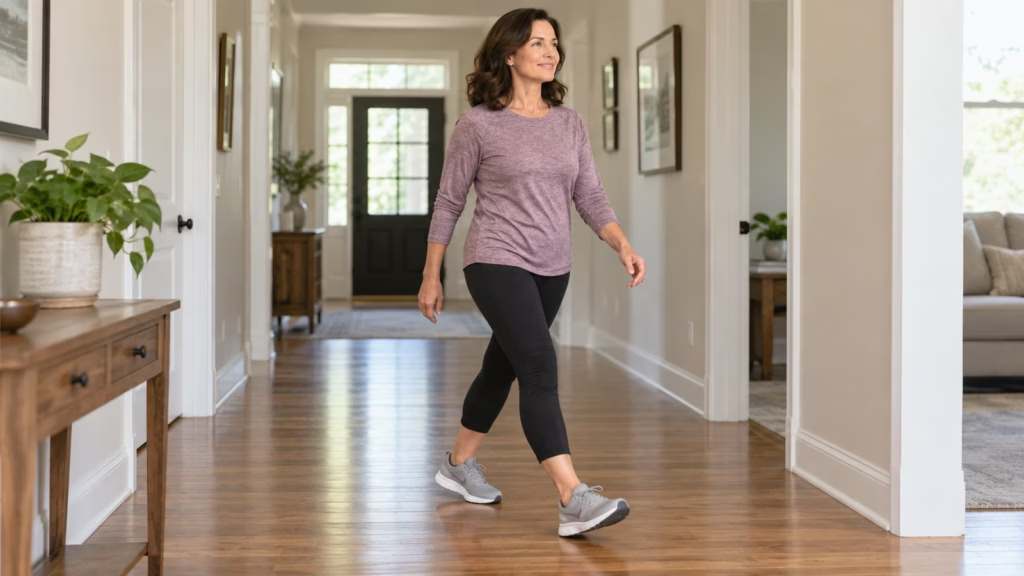
Your shoes are ready, but the weather has other plans. Indoor walking gives you another way to move without requiring a treadmill or a large home: use a clear household route, a suitable indoor public space, or short walks during the workday. Choose the option you can access safely, then match the pace and duration to your abilities. A small usable plan is more helpful than an ambitious one with nowhere to happen.
The best backup walking route is the one you can actually use on the day you need it.

Choose among three indoor walking options
Start with access rather than equipment. Each option has a different practical advantage, and none is automatically right for every person. Think about floor space, transport, cost, opening times, and whether other people need the same route.
| Option | Useful when | Check first |
|---|---|---|
| A clear route at home | You want a convenient option without traveling | Obstacles, turning space, footwear, and shared rooms |
| A permitted public indoor space | You want a longer, more open route | Walking rules, access, opening hours, fees, and rest areas |
| Short workday walks | You can use safe breaks in your schedule | Workplace rules, corridor access, and your responsibilities |
A mall, community center, or indoor track may work if walking is permitted and the space is accessible to you. Verify those details before making the trip; a building being open does not make every corridor a public walking route. At work, keep exits, equipment areas, and other people’s tasks clear.
Set up the route before adding speed
For home-based indoor walking, choose a route that lets you turn comfortably rather than weaving around furniture at speed. I’d clear the path first and decide on pace afterward. The furniture does not need to become an obstacle course just because the weather is inconvenient.
- Look at the floor. Move loose items and cords out of the route, check for slippery patches, and keep doors from opening unexpectedly into your path. Use footwear that feels stable on that surface.
- Leave room to change direction. Slow down for turns, especially in a small room. You do not need a complicated pattern of forward, backward, and sideways steps to make the activity count as movement.
- Consider everyone sharing the space. Choose a time that does not put you in the middle of cooking, deliveries, pets, or other household traffic. A shorter clear route is preferable to one that keeps being interrupted.
- Keep your attention on the path. If you listen to something, stay aware of your surroundings. Reading a phone while walking can make it harder to notice what is directly ahead.
If your available space does not feel safe or comfortable, choose another location or a different activity that suits you. Indoor walking is an option, not a requirement to turn every room into a workout area.
Know the difference between a movement break and a brisk walk
A gentle indoor walk and a brisk one can serve different purposes. CDC’s talk test describes moderate-intensity activity as an effort at which you can talk but not sing. That is a general guide, not a reason to chase a pace that feels inappropriate for your health or abilities.
- For a break from sitting: an easy walk can simply add movement to the day. There is no need to describe every lap as a full workout.
- For moderate-intensity activity: choose a suitable route and an effort you can manage safely. Speed, fitness, and individual circumstances affect how demanding a walk feels.
- For tracking: note the time and general effort if that helps you plan. Avoid treating a step count or a calorie estimate as an exact measure of what every person gets from the same route.
CDC’s adult guidance recommends 150 minutes of moderate-intensity activity each week plus muscle-strengthening activity on two days, and says activity can be split into smaller periods. Some movement is better than none, but a few easy laps do not automatically meet the full recommendation or replace strength work.

Give the next walk a place in your day
Indoor walking becomes easier to plan when you attach it to something that already happens, rather than waiting for a completely free afternoon. Choose a short, manageable opportunity and leave yourself permission to adjust it. These are scheduling examples, not a prescribed exercise dose.
- Choose the cue. That could be after finishing a work task, during an agreed break, or before settling into an evening activity. Use a moment you can recognize without needing another elaborate reminder system.
- Choose the route. Know where you’ll walk before the break begins. If a public indoor space is your option, keep a home alternative for days when travel or opening hours get in the way.
- Start at a manageable level. Match the plan to your current activity and abilities. If you have a chronic health condition, CDC advises discussing suitable types and amounts of activity with your doctor.
- Keep the useful part. Notice whether the route, timing, and effort worked. Change the practical obstacle rather than assuming one missed walk means the idea has failed.
I like having a backup that requires little negotiation with the day. If a brief walk is also your transition out of work, the after-work decompression guide offers ways to make that handoff more deliberate.
Sources

Hi, I’m Sara Tancradi, the author behind Zenypath. I write about everyday wellness, mindful living, and small habits that make room for a little more calm. My approach is practical and gentle: explore what’s useful, stay curious, and find routines that fit your life. Through clear explanations and approachable ideas, I hope to make caring for yourself feel less overwhelming—and a little more enjoyable.