

The curtains are still closed, the laptop is already open, and suddenly it is lunchtime. Morning light is an easy part of the day to miss when work starts indoors. If you keep a daytime schedule, making room for daylight after waking can support your body’s day-and-night cues; it does not require a perfect sunrise, a stopwatch, or a shorter night.
Make daylight part of a morning you can actually live with, rather than another reason to set the alarm earlier.
What morning light can and cannot do
Your circadian rhythm is your body’s roughly 24-hour timing pattern. Light is one of the environmental signals that helps coordinate it with the day. The NHLBI explains that light and darkness help shape when you feel awake and sleepy, alongside other processes, including the pressure to sleep that builds while you are awake.
That is useful context, but it does not make daylight a cure for insomnia or a substitute for sufficient sleep. I prefer to think of this as giving the morning a clear beginning, not trying to force the body into a new personality.
- A realistic aim: add a regular opportunity for daylight near the start of your waking day when you follow a daytime schedule.
- A claim to leave behind: a precise number of minutes will reset everyone’s hormones or guarantee a good night.
- A helpful distinction: ordinary time outdoors is different from a prescribed bright-light treatment for a sleep disorder.
- A basic safety rule: look around normally, never directly at the sun. Keep your usual sun protection and any eye-care advice.
Choose the easiest daylight opening you already have
NIOSH notes that bright light shortly after waking may help alertness. For everyday planning, start by looking for a repeatable opportunity instead of an ideal routine someone else can manage. Sitting outside counts as an option; you do not need to add a workout.
| Your morning | One practical option |
|---|---|
| You work at home | Step outside before opening the work inbox |
| You commute | Use a safe outdoor part of the trip once it is light |
| Walking is not comfortable or accessible | Sit in a suitable outdoor space if one is available |
| You start before sunrise | Turn on enough indoor light to function safely; seek daylight later |
| Weather or air quality makes outside unsuitable | Stay safe indoors and reopen the outdoor plan another day |
Opening curtains can make an indoor morning brighter, but a seat by the window is not automatically equivalent to being outdoors. Light levels vary with the room, window, weather, and season. I would keep the practical fallback without pretending it delivers an identical dose.
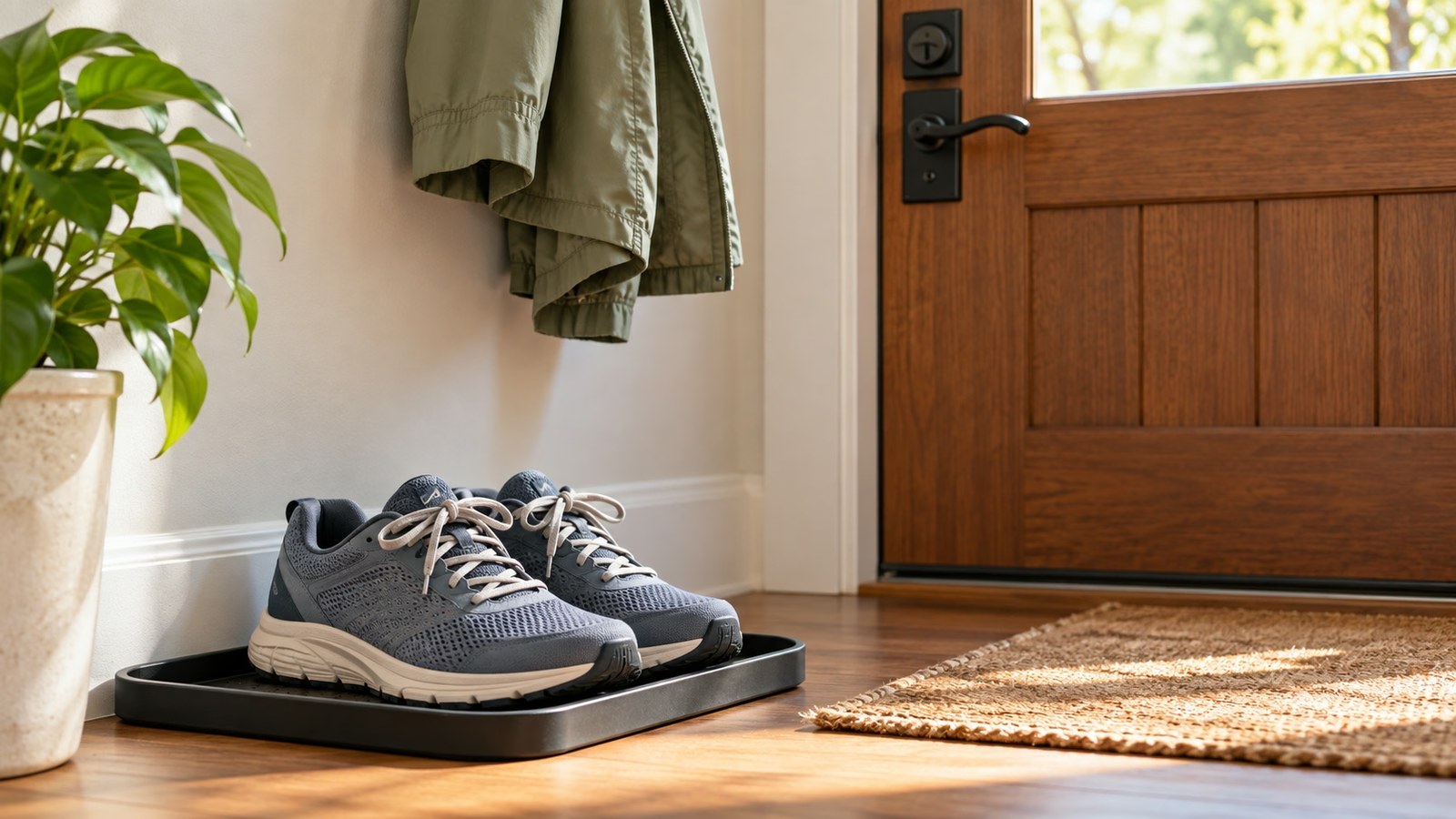
If stepping out is the choice, make leaving easier: put shoes where you can find them, choose a familiar route, or move an ordinary phone call outside when privacy allows. A habit attached to something already happening usually asks less of a crowded morning than a completely separate event.
Protect the night while you build the morning
There is little sense in shaving off needed sleep to complete a daylight checklist. Keep enough time available for your main sleep, and choose a wake-up time that fits your responsibilities as consistently as possible. Our guide to bedtime procrastination may help if your only personal time keeps spilling late into the night.
Light timing has two sides. The NHLBI notes that bright artificial light late in the evening can interfere with normal melatonin release and make falling asleep harder. Morning light belongs in a broader pattern, rather than acting as a receipt that cancels the previous evening.
- Start with one change. Try a daylight break before work without also overhauling exercise, breakfast, caffeine, and bedtime.
- Make evenings comfortable. Use less intense lighting when winding down, while keeping enough light for safe movement and the task in front of you.
- Notice the whole pattern. Is getting outside workable? Is bedtime still realistic? Are you cutting sleep to maintain the routine? Those questions matter more than a streak.
- Keep a missed morning small. Use the next reasonable opening. You do not need to compensate with a longer session or abandon the week.
Know when generic light advice is the wrong fit
If you are coming home from a night shift and trying to sleep, morning light may work against your immediate goal. If your sleep schedule is persistently much earlier or later than you need, the timing of light can require a tailored plan. Earlier is not always better.
The NHLBI’s treatment guidance uses different light timing for different circadian problems. It also notes that light therapy can have side effects and warrants medical advice with eye conditions or medicines that increase light sensitivity.
- For shift work: ask about a plan that takes your work hours, commute, and daytime sleep into account.
- Before using a light box: check suitability and timing with a qualified clinician rather than borrowing another person’s treatment schedule.
- For persistent difficulty: seek advice if sleep problems or daytime sleepiness are interfering with daily life despite having a reasonable chance to sleep.
My starting point would still be modest: a safe, ordinary encounter with morning light that fits a daytime routine. If the plan makes mornings harsher or steals rest, change the plan. It should serve the day you have, not become another test you can fail.
Sources
- NHLBI: Your Sleep/Wake Cycle
- CDC/NIOSH: Effects of Light on Circadian Rhythms
- NHLBI: Circadian Rhythm Disorders Treatment

Hi, I’m Sara Tancradi, the author behind Zenypath. I write about everyday wellness, mindful living, and small habits that make room for a little more calm. My approach is practical and gentle: explore what’s useful, stay curious, and find routines that fit your life. Through clear explanations and approachable ideas, I hope to make caring for yourself feel less overwhelming—and a little more enjoyable.