
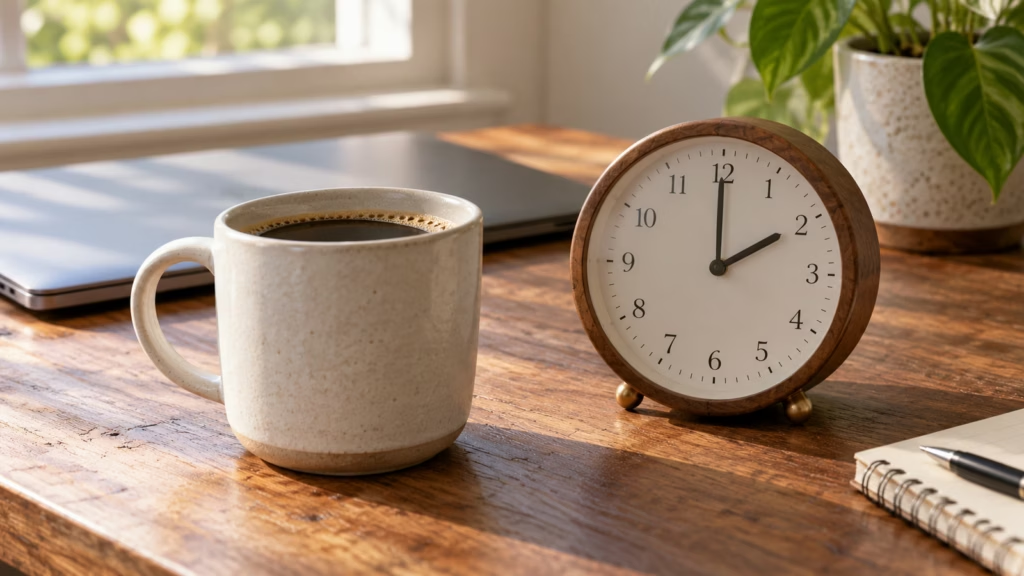
You’re considering an afternoon coffee, and someone’s rule about ‘nothing after two’ comes to mind. But two o’clock means something different if you sleep at ten than if you work evenings. When to stop drinking caffeine is better considered in relation to your planned sleep, the amount you consume, and your own response. An eight-hour gap is a practical starting point to consider, not a promise that caffeine will be gone or sleep will be unaffected.
Start with the night you want to protect, then decide where the last caffeinated drink fits.
When to stop drinking caffeine: three bedtime examples
The National Heart, Lung, and Blood Institute notes that caffeine’s effects can last up to eight hours. Counting back that far gives you an initial planning reference. These examples show the arithmetic only; they are not individual safe limits, and some people may need an earlier cutoff.
| Planned bedtime | Eight hours earlier |
|---|---|
| 10 p.m. | 2 p.m. |
| 11 p.m. | 3 p.m. |
| Midnight | 4 p.m. |
I’d use the example to make the next decision simpler: ‘Will this drink fit the gap I’m trying?’ If your bedtime changes, redo the calculation rather than carrying over a fixed afternoon rule. For shift workers, NHLBI advises limiting caffeine to the first part of the shift; a work-and-sleep schedule may need more tailored guidance.
Count the drink you have, not the idea of a cup
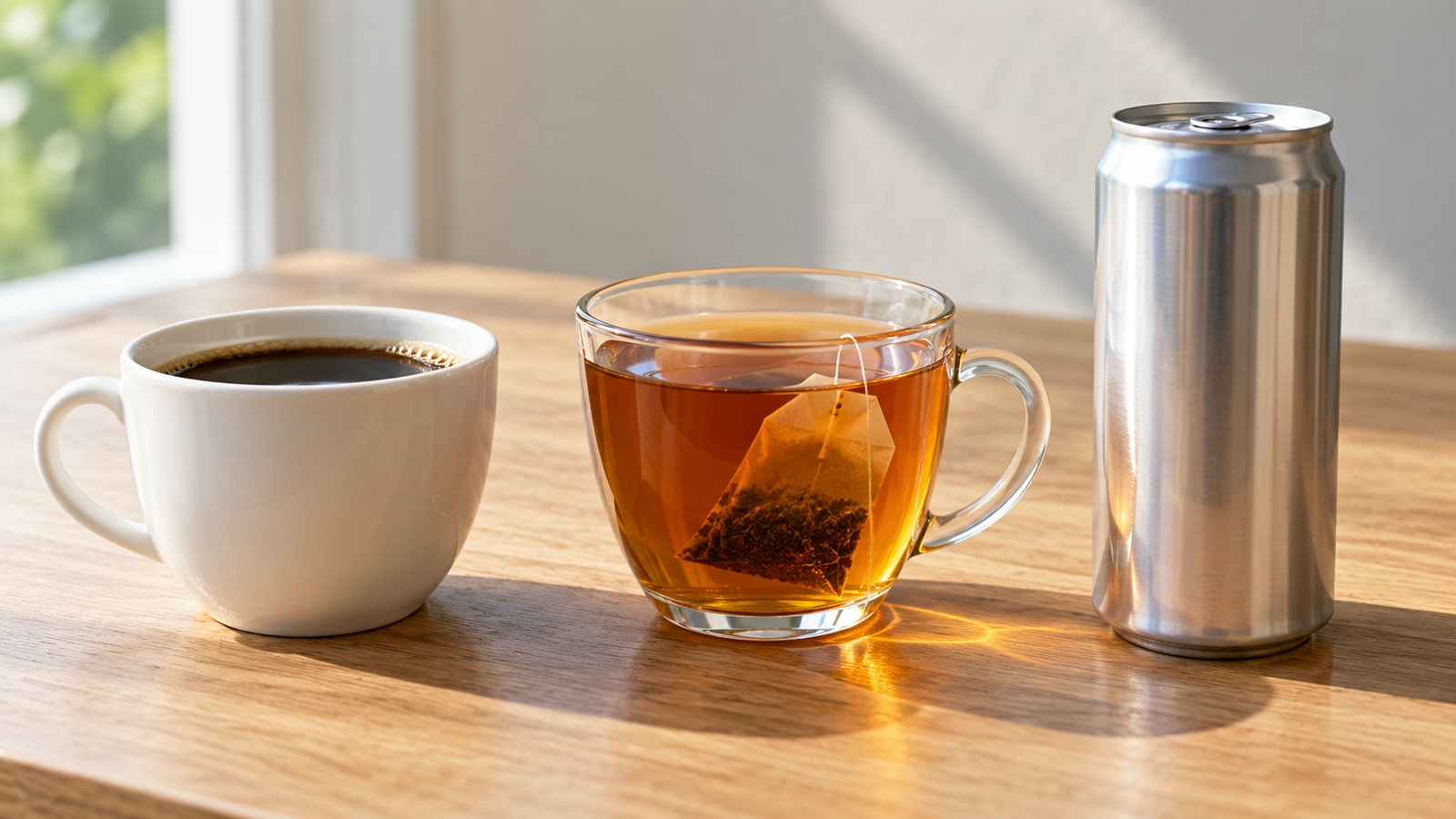
Timing is only part of deciding when to stop drinking caffeine. The FDA explains that caffeine amounts vary by product and serving size, and people differ in sensitivity and how quickly they eliminate it. A large café drink and a small home-brewed cup are not reliable interchangeable measures.
- Use the stated serving size. If caffeine milligrams are provided, check whether they describe the whole container or one serving. Keep the container size with your notes rather than writing only ‘coffee.’
- Look beyond coffee. Tea, caffeinated soft drinks, energy drinks, chocolate, and some supplements or medicines can contribute caffeine. Check relevant packaging or ask the manufacturer or pharmacist when you’re unsure.
- Keep decaf in perspective. It usually contains less caffeine, but it is not necessarily caffeine-free. Choose a clearly caffeine-free option if that distinction matters for your plan.
- Don’t guess from the marketing. A word such as ‘natural’ does not tell you how much caffeine a product contains. What you need for a useful comparison is the amount and portion.
A photo of the label can be easier than trying to remember a number later. For a café order without published information, record the shop, drink, and size, and mark the amount as unknown. An honest blank is more useful than an exact-looking estimate with no basis.
Use a small, clear observation plan
A simple diary can make a question such as when to stop drinking caffeine less vague. CDC includes caffeinated drinks in its suggested sleep-diary information. Your notes can help you notice patterns or explain them to a clinician; they cannot prove that caffeine caused a particular night’s sleep.
- Record the current pattern. Note each caffeinated item, portion, and time, along with when you go to bed and wake up. Include repeated overnight waking and how rested you feel in the morning.
- Pick one manageable change. For example, move the final caffeinated drink earlier while keeping its portion similar. Changing several things at once makes it harder to know which difference might matter.
- Notice competing explanations. A demanding day, a late shift, illness, noise, or a changed bedtime can muddy the comparison. Add a short note rather than forcing every result into a caffeine explanation.
- Review more than one night. Look for a repeated pattern instead of declaring success or failure after a single evening. If the question remains unclear or sleep problems continue, bring the notes to a healthcare professional.
I prefer a few useful observations to a beautiful tracker that becomes another chore. A line on paper can be enough: drink and time, bedtime, waking, and one relevant note. There is no required app, and no need to score your night like an exam.
Keep the break, and know when timing isn’t enough
Sometimes the afternoon drink is also the pause you wanted. Keep that pause if it helps: step away from your desk, sit somewhere else, or choose a drink that fits your caffeine plan. When to stop drinking caffeine is one decision; giving yourself a break is another, and the second does not have to disappear.
- Make the swap convenient. Put water or another suitable caffeine-free option where you normally reach for coffee. Choose something you actually want rather than treating the change as a penalty.
- Reduce thoughtfully. FDA advises gradually cutting back if you regularly consume caffeine and want less, because withdrawal can be unpleasant. A timing experiment does not require suddenly stopping every source.
- Get personal advice when needed. Pregnancy, breastfeeding, some medical conditions, and certain medicines can change caffeine guidance. Ask your healthcare professional about your situation rather than applying these examples as a prescription.
- Look at the rest of the evening. An earlier coffee won’t create sleep time if activities keep delaying bed. If that sounds familiar, our guide to bedtime procrastination addresses that different obstacle.
If you regularly struggle to sleep, or remain very sleepy during the day, seek medical advice rather than endlessly moving the cutoff. The useful outcome is a clearer picture of your needs, not finding one magic hour that everyone should obey.
Sources
- NHLBI: Healthy Sleep Habits and Caffeine Timing
- FDA: Caffeine Amounts, Sensitivity, and Labels
- CDC: Sleep Quality and Sleep Diaries

Hi, I’m Sara Tancradi, the author behind Zenypath. I write about everyday wellness, mindful living, and small habits that make room for a little more calm. My approach is practical and gentle: explore what’s useful, stay curious, and find routines that fit your life. Through clear explanations and approachable ideas, I hope to make caring for yourself feel less overwhelming—and a little more enjoyable.