

An ordinary chair can make some movement feel more approachable, especially when a standing routine does not fit your day. Chair exercises still need a suitable seat and movements that are right for you. Begin with stability and comfortable effort, and ask a healthcare professional for guidance if you are unsure about exercising with an injury, condition, or care restriction.
A supported starting point is useful when the movement and the setup both fit you.
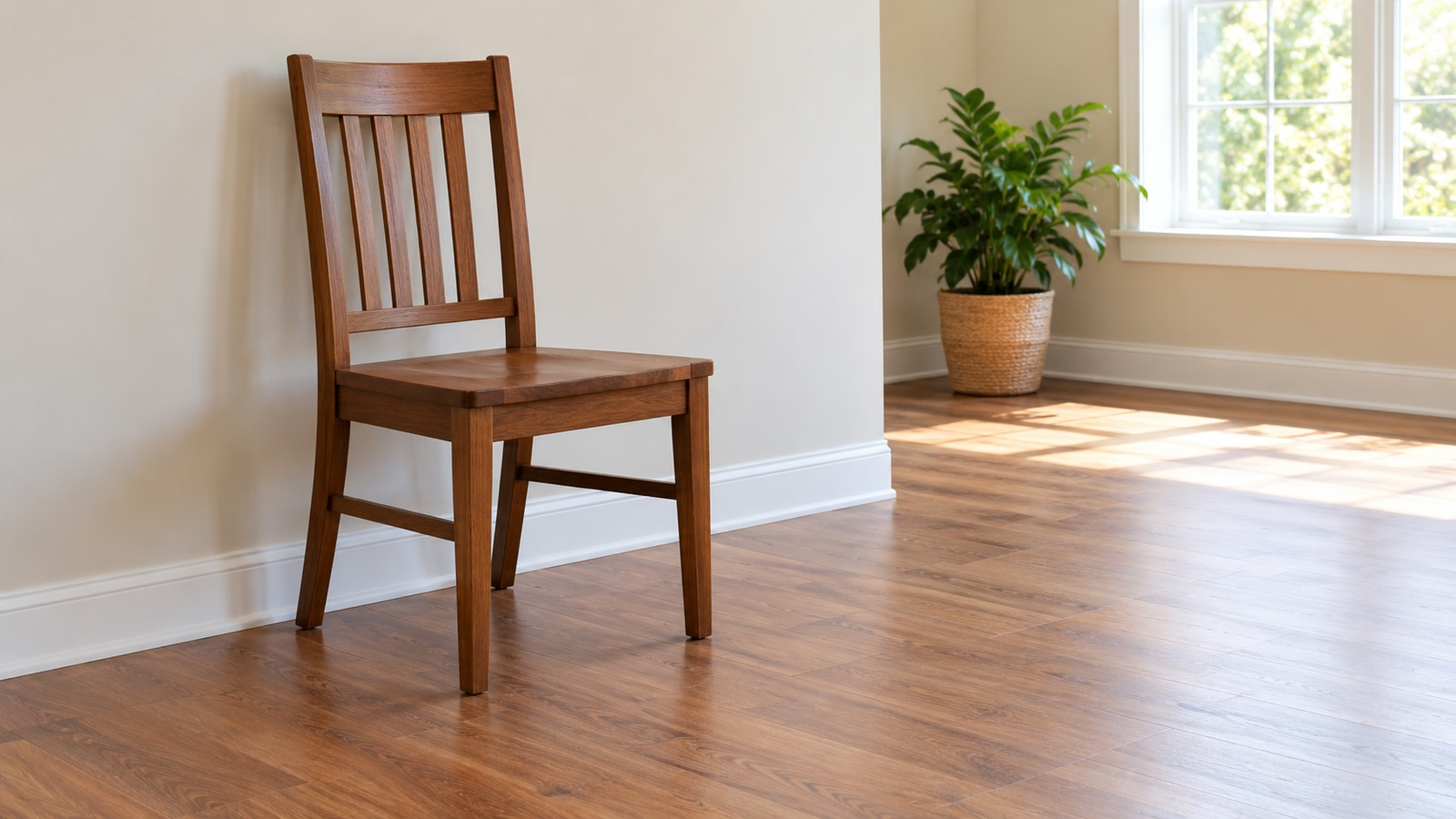
Set up for chair exercises before choosing the moves
The NHS sitting-exercise guide recommends a solid chair without wheels or arms, with feet resting flat and knees at right angles. Armrests can restrict the movements in that routine. A rolling office chair or a low, soft sofa is a different setup.
I would check the seat before pressing play on a workout. It is a small practical detail, but it helps you decide whether the suggested movement is even workable in the space you have.
- Choose a clear space: leave room for your legs and upper body to move without hitting a table, wall, or loose object.
- Check the chair itself: do not use one that rocks, slides, or feels unstable. A decorative chair is not automatically suitable just because it looks sturdy in a photograph.
- Check the fit: if the recommended position is not comfortable or your feet cannot rest as intended, seek a more suitable setup instead of balancing on improvised supports.
- Keep what you need nearby: suitable clothing, water if appropriate, and any personal care instructions. You should not need to repeatedly twist or reach for things during the movement.
If someone helps you prepare the space, explain the actual movements you plan to try. ‘I need a chair’ can mean very different things from one exercise video to another.
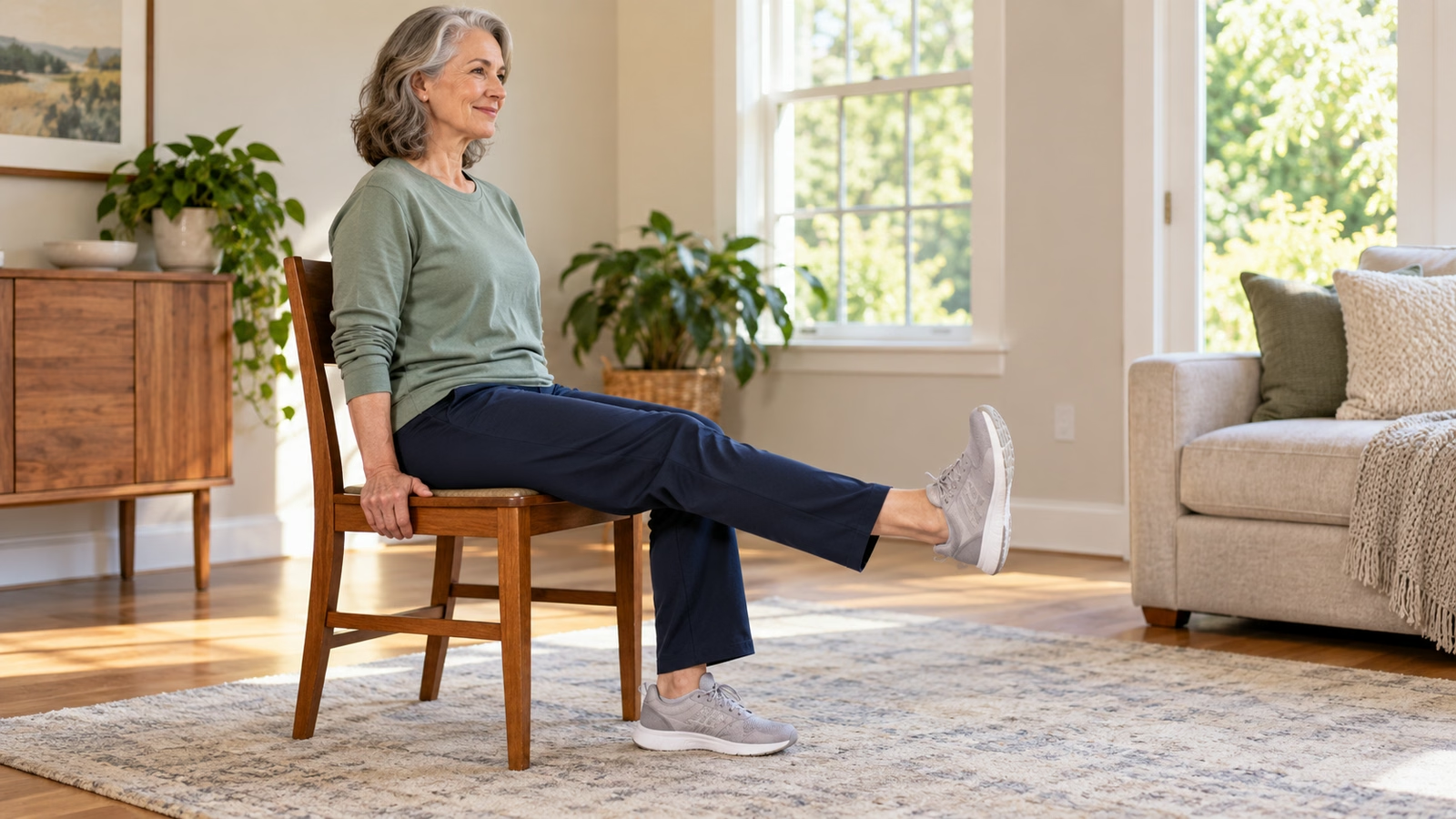
Three gentle seated movements to consider
These options come from the NHS guide and are for people for whom the movements are suitable. Read the full illustrated instructions linked above, move within a comfortable range, and do not use a general article to replace your own rehabilitation plan.
- Seated hip marching: sit upright without leaning back, hold the chair’s sides, and lift one bent knee as far as comfortable. Lower the foot with control, then alternate legs; the NHS suggests five lifts per leg.
- Ankle stretch: sit upright holding the chair’s sides, straighten one leg with the foot raised, and gently point the toes away and then toward you. The NHS suggests two sets of five stretches for each foot.
- Upper-body turn: sit upright with feet flat, cross your arms toward your shoulders, and turn the upper body comfortably without moving the hips. The NHS suggests holding five seconds and repeating five times each side.
Those repetition suggestions are not instructions to push through pain or override individualized advice. Start with what is appropriate for you, and ask for an adaptation when a movement or position does not fit. Chair exercises should not become a competition with the person on the screen.
Make the session easy to repeat, not harder to finish
Give the movement a manageable place in the day rather than trying to squeeze a large circuit into a busy gap. For older adults beginning activity, MedlinePlus advises starting slowly and checking what is right for your health. You do not have to add speed, weights, or extra rounds to make a first attempt count.
- Choose a suitable moment. Pick a time when you can prepare the chair and pay attention to the movement. Avoid beginning while you are rushing to another responsibility.
- Read one movement first. Make sure the position and instructions are clear before attempting it. If a video moves too quickly, pause to review rather than hurrying to keep up.
- Keep the range comfortable. The aim is controlled movement that suits you. Do not force a higher knee, a larger turn, or a straighter leg just to resemble an illustration.
- Review what worked. Notice whether the seat, space, and movement were manageable. Keep that information for the next session or for a conversation with your healthcare professional.
My preference is to solve a setup problem before adding another exercise. Perhaps the chair needs a different location, the instructions need explaining, or the suggested move needs replacing. More repetitions do not fix those problems.
Leave room for a broader, individualized activity plan
Chair exercises are one possible starting point, not a complete program for every goal. MedlinePlus describes endurance, strength, balance, and flexibility as different parts of activity for older adults. A few seated movements do not automatically cover all of them.
The CDC’s adult guidance includes aerobic activity and muscle strengthening. Which activities are appropriate, and how to build them up, depend on your circumstances. If standing activity suits you, the home strength-training guide is a separate introduction, rather than a compulsory next step.
- For pain or concerning symptoms: stop the unsuitable activity and seek guidance. Being seated does not make every movement appropriate.
- For recovery or an existing condition: follow your clinician’s or physiotherapist’s plan. Do not substitute a general routine for prescribed exercises.
- For uncertainty about balance or mobility: ask for an assessment and suitable options, rather than assuming a chair removes every risk.
- For progression: change the plan gradually with appropriate guidance. Keep comfortable technique and a workable setup ahead of a longer checklist.
A useful start can be ordinary: a stable chair, a clear space, and one appropriate movement. Let chair exercises help you find a manageable way to be active, without asking them to solve every fitness question at once.
Sources

Hi, I’m Sara Tancradi, the author behind Zenypath. I write about everyday wellness, mindful living, and small habits that make room for a little more calm. My approach is practical and gentle: explore what’s useful, stay curious, and find routines that fit your life. Through clear explanations and approachable ideas, I hope to make caring for yourself feel less overwhelming—and a little more enjoyable.